
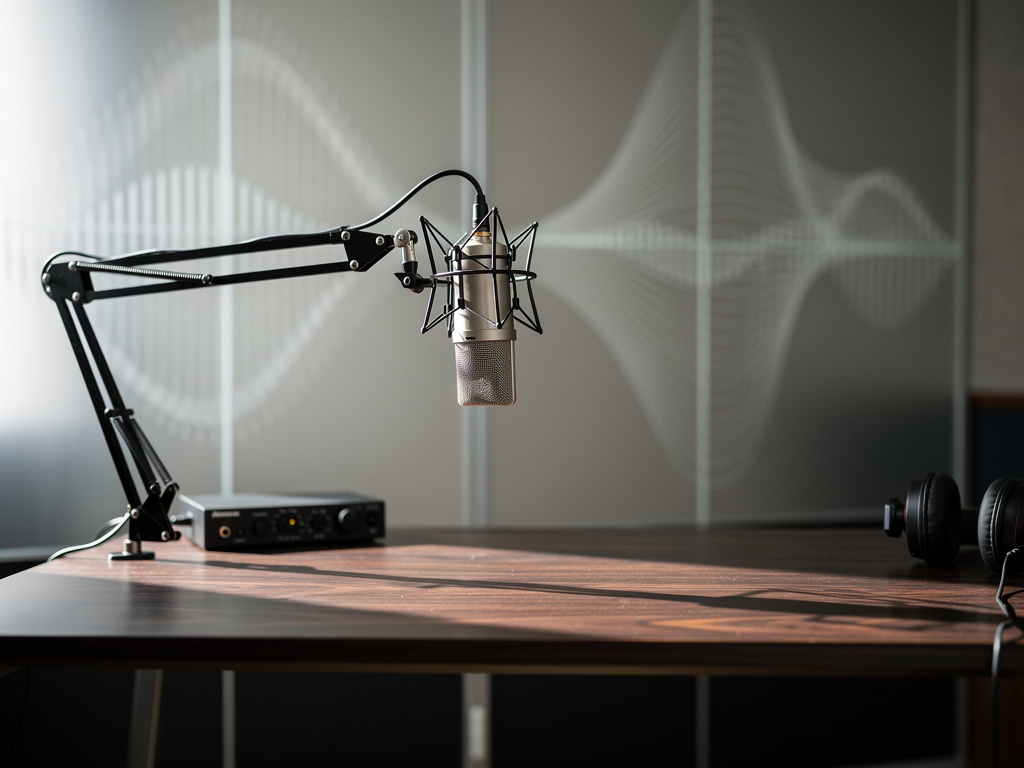
Late into another evening, you're hunched over your keyboard, manually transcribing your latest podcast episode. Your eyes are strained, your fingers are cramping, and you can't help but think there must be a better way. As a content creator, you know the value of transcripts – they boost SEO, make your content accessible, and provide raw material for blog posts and social media. But the hours spent converting audio to text are stealing precious time you could use for creating more content.
The challenges don't end with the time sink. Accurate transcription requires catching every word, properly identifying different speakers, and maintaining the context of complex conversations. When you've tried automated solutions in the past, they've stumbled over industry jargon, botched speaker attribution, and created more editing work than they saved.
The good news? Modern AI-powered transcription has evolved dramatically. Sonix reports that content creators using automated transcription are able to redirect significant time toward strategic tasks like content planning and audience engagement. The technology now handles multiple speakers, various accents, and even industry-specific terminology with remarkable accuracy.
Let's walk through a practical, step-by-step process to automate your podcast transcription workflow effectively. By implementing these proven strategies, you'll be able to transform your audio content into valuable written assets without the manual labor that's been holding you back.
Step 1: Prepare Your Audio for Optimal Transcription
Before diving into automation, ensuring your audio quality meets certain standards will significantly improve your transcription results. Think of it like giving your automation tools the clearest possible instructions.
Start by recording in a quiet environment with minimal background noise. Use a quality microphone positioned correctly to capture clear speech. If you're interviewing guests remotely, ask them to use headphones and find a quiet space – this dramatically improves the clarity of their audio.
When editing your podcast, pay special attention to reducing cross-talk and cleaning up any significant audio issues. Modern transcription AI performs best with clear, well-separated speech. If you have multiple speakers, try to maintain clear transitions between them.
Export your final audio in a widely-supported format like MP3 or WAV at a standard quality setting. While high-resolution audio files might seem better, they don't necessarily improve transcription accuracy and can increase processing time.
Audio Quality Tips
Record in 'mono' instead of stereo for cleaner transcription results. Use a pop filter to reduce plosive sounds. Keep your microphone at a consistent distance throughout recording. These small adjustments significantly improve transcription accuracy.
Step 2: Choose the Right Automation Tool
Selecting an appropriate transcription service is crucial for your workflow. Consider these key factors when evaluating options:
Accuracy is paramount – look for services that handle multiple speakers effectively and offer speaker identification (diarization). The best tools can distinguish between different voices while maintaining context throughout the conversation.
Processing speed matters when you're working with regular podcast episodes. You need a solution that can return transcripts quickly enough to fit your content schedule. Modern AI services can process audio in near real-time, allowing you to start working with transcripts almost immediately.
Integration capabilities should match your workflow. Consider whether you need direct integration with your podcast hosting platform, content management system, or other tools you use regularly. The easier it is to move transcripts between systems, the more time you'll save.
Pricing models vary significantly between services. Some charge by the minute of audio, others offer monthly subscriptions with set quotas. Calculate your typical usage to find the most cost-effective option for your needs.
Step 3: Set Up Your Automated Workflow
Creating an efficient transcription workflow means connecting all the pieces of your content production system. Start by mapping out your ideal process from recording to publishing.
First, establish a consistent file naming convention for your audio files and transcripts. This helps track episodes and versions across your workflow. Create dedicated folders or cloud storage spaces for your raw audio, processed transcripts, and final content.
Many modern transcription services offer API access or automation tools. Take advantage of these to create automatic triggers – for example, having new episode uploads automatically sent for transcription. This eliminates manual steps and reduces the chance of episodes slipping through the cracks.
Consider setting up backup systems for your transcripts. While automation is reliable, having backups of your transcribed content ensures you never lose valuable written material.
If you use project management tools, integrate your transcription workflow into your existing systems. This might mean creating standard tasks for transcript review or setting up notifications when transcripts are ready for editing.
Transcript Review Checklist
- Verify proper names and technical terms
- Check speaker labels and transitions
- Review punctuation in key quotes
- Confirm paragraph breaks make sense
- Look for repeated word errors
- Validate time stamps if included
Step 4: Implement Quality Control Measures
While AI transcription has become incredibly accurate, implementing a streamlined review process ensures your transcripts meet professional standards. The goal is to catch any critical errors while minimizing the time spent on manual review.
Develop a quick scanning technique for reviewing transcripts. Focus on proper nouns, technical terms, and crucial statements first – these are areas where AI might need human verification. Pay special attention to speaker attribution and paragraph breaks.
Use find-and-replace tools effectively to correct recurring errors. If your podcast frequently uses industry-specific terms or names, create a custom dictionary or replacement list to speed up editing. Some advanced transcription services allow you to upload custom vocabularies.
Consider having a second set of eyes review important segments, especially for episodes with technical content or multiple guests. This can be particularly valuable for sections you plan to quote or repurpose.
Pulse by Smallest AI stands out here with its exceptional accuracy for technical terms and multiple speakers, significantly reducing the time needed for quality control.
Step 5: Maximize Transcript Value Through Repurposing
Once you have accurate transcripts, transform them into various content formats to maximize their value. This is where automation truly pays off in terms of content multiplication.
Start by using your transcripts to create comprehensive show notes. Extract key quotes, timestamps, and main points to provide value for both listeners and readers. These become valuable SEO assets for your podcast website.
Use transcripts to identify compelling snippets for social media. Look for short, impactful statements that can stand alone as quotes or insights. These make excellent content for platforms like Twitter, LinkedIn, or Instagram.
Create blog posts by expanding on key topics discussed in your episodes. Your transcript provides a detailed outline – add context, examples, and additional resources to transform it into a standalone article.
Consider using parts of your transcripts for email newsletters, helping maintain engagement with your audience between episodes. You can highlight key insights or tease upcoming content based on recent recordings.
Conclusion
The path to efficient podcast transcription automation is clear: start with quality audio, choose the right tools, establish a streamlined workflow, implement smart quality control, and maximize the value of your transcripts through strategic repurposing. By following these steps, you'll transform hours of manual transcription work into a smooth, automated process that frees you to focus on what matters most – creating great content and growing your audience.
Remember, automation isn't about removing the human element from your content creation – it's about giving you more time to add it where it matters most. As you implement these strategies, you'll find yourself with more energy for creativity, audience engagement, and strategic growth.

How Pulse by Smallest AI Transforms Podcast Transcription
Smallest AI
Global Accent Support
Accurately transcribes diverse guest voices without struggling with accents or dialects
Real-time Processing
Delivers transcripts at extreme low latencies, letting you start content repurposing immediately
Simple API Integration
Seamlessly fits into your existing podcast production workflow with minimal technical setup
Frequently Asked Questions
Sources & References
- 1
AI Podcast Transcription API: Set Up & Transcribe in Minutes
https://cleanvoice.ai/blog/podcast-transcript-api-guide/
- 2
AI Podcast Transcript - Swell AI
https://www.swellai.com/blog/ai-podcast-transcript
- 3
Free Podcast Transcription: Convert Podcast to Text Fast - Otter.ai
https://otter.ai/podcast-transcription
- 4
Podcast Transcription - AI-Powered Podcast to Text | SozAI
https://sozai.app/podcast-transcription/
- 5
AI podcast transcription - Transistor
https://transistor.fm/features/ai-transcription/
- 6
Best Transcription Software For Podcasting - Sonix
https://sonix.ai/resources/transcription-software-podcasting/
- 7
Podcast Transcription Services | 60 Minutes Free Every Month
https://www.dictaai.com/podcast-transcription
- 8
Convert Audio to Text Free | AI Transcription Tool - HappyScribe
https://www.happyscribe.com/audio-to-text
- 9
How I Automated My Podcast Transcript Production With ...
https://den.dev/blog/how-i-automated-podcast-transcription-with-local-ai/
- 10
Transcribe Audio to Text: AI Transcription Software - Restream
https://restream.io/tools/transcribe-audio-to-text
- 11
Transcribe Audio to Text with AI - ElevenLabs
https://elevenlabs.io/audio-to-text
- 12
Podcast Transcription, Summaries & Clips – Try Free
https://podsqueeze.com/
More from Smallest AI
Voice Fatigue Solutions: How AI Speech Generation Saves Creator Health
Discover how AI speech generation helps YouTubers and course creators protect their vocal health while scaling content production. Learn sustainable voice solutions for content creators.
How to Transform Your Podcast Audio into SEO-Rich Content Automatically
Learn how to automate podcast transcription and convert your audio content into SEO-optimized text, show notes, and social media posts efficiently.
How to Reduce Voice AI Latency: The Ultimate Guide to Sub-300ms Response Times
Learn proven strategies to optimize your voice AI system for ultra-low latency. Master streaming, edge computing, and pipeline optimization techniques for real-time voice processing.