
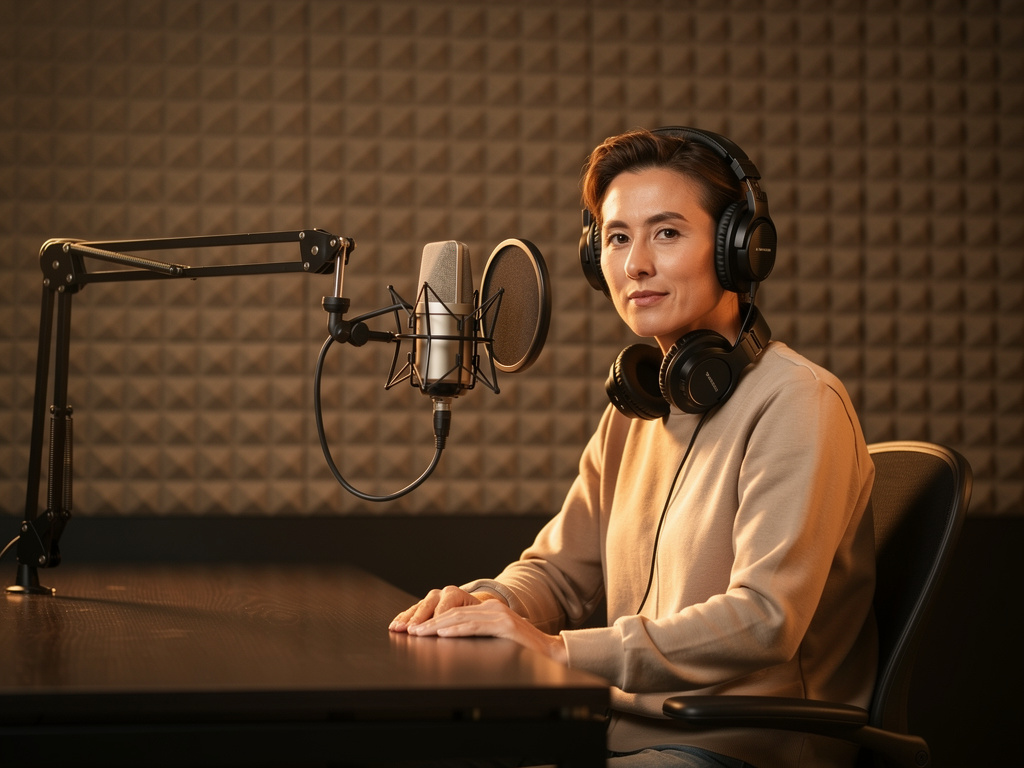
It's 2 AM, and you're still hunched over your desk, recording the same voiceover segment for the fifteenth time. Your throat is sore, the audio quality keeps varying between takes, and you have five more scripts to get through before tomorrow's deadline. As a content creator or podcaster, this scenario probably feels all too familiar.
The pressure to produce more content, faster, while maintaining consistent quality has never been higher. Your audience expects professional-grade audio across all your channels - from YouTube videos to podcast episodes to social media clips. But between the time-consuming recording sessions, expensive voice talent, and endless post-production work, something has to give.
This is where voice AI tools are transforming the game for creators like you. Recent advances in AI voice technology have made it possible to generate natural-sounding speech, clone voices, and automate audio production tasks that once took hours. But with so many options available, choosing the right tool for your specific needs can feel overwhelming.
In this guide, we'll cut through the hype to help you understand exactly what today's leading voice AI tools can (and can't) do for your content creation workflow. We'll compare the top options across key factors that matter most to creators and podcasters, so you can make an informed decision about which solutions are worth your investment.
Understanding Voice AI Technology for Content Creation
Before diving into specific tools, it's important to understand what modern voice AI can do for your content creation workflow. Voice AI technology has evolved far beyond basic text-to-speech, now offering capabilities that can transform how you produce audio content.
At its core, voice AI encompasses several key functionalities that are particularly valuable for creators and podcasters:
Voice Synthesis: The ability to generate natural-sounding speech from text, complete with proper intonation, emphasis, and emotional expression. This is perfect for creating voiceovers, narration, and automated content reading.
Voice Cloning: Technology that can learn and replicate your voice or create custom synthetic voices. This allows you to scale your content production without the physical limitations of recording everything yourself.
Audio Processing: AI-powered tools that can clean up audio, remove background noise, adjust pacing, and even fix mistakes without requiring re-recording.
Multilingual Capabilities: The ability to translate and generate content in multiple languages while maintaining the original voice characteristics, opening up global audience possibilities.
The most exciting aspect for creators is how these capabilities can work together to automate and enhance your audio production workflow. Instead of spending hours recording and re-recording, you can focus on creating great content and let AI handle the technical execution.
Voice AI Use Cases for Different Content Types
| Content Type | Best For | Watch Out For |
|---|---|---|
| Podcasts | Long-form narration, guest voice recreation, automated intros/outros | Maintaining consistent energy levels, proper pacing |
| Video Content | Quick voiceovers, multiple language versions, character voices | Lip-sync accuracy, emotional expression |
| Social Media | Rapid content creation, trend-based voice styles | Platform-specific tone requirements, length limitations |
Key Features to Look for in Voice AI Tools
When evaluating voice AI tools for your content creation needs, several critical features can make or break their usefulness in your workflow:
Voice Quality and Naturalness: The best tools produce speech that sounds human-like, with natural pauses, emphasis, and emotional range. Pay attention to how the voice handles complex sentences, technical terms, and varying emotional tones.
Customization Options: Look for tools that offer fine-tuned control over voice characteristics like speed, pitch, and emphasis. The ability to add custom pronunciations for specific terms is especially valuable for niche content creators.
Processing Speed: Real-time or near-real-time processing can significantly impact your workflow efficiency. Some tools offer faster processing times than others, which becomes crucial when you're working with longer content pieces.
Integration Capabilities: Consider how well the tool fits into your existing workflow. The best options offer integrations with popular content creation platforms and export capabilities in various audio formats.
One standout solution in terms of processing speed is Hydra by Smallest AI, which offers real-time processing with remarkably low latency, making it particularly effective for creators who need quick turnaround times.
Scalability and Batch Processing: As your content needs grow, the ability to process multiple files or long-form content efficiently becomes increasingly important. Look for tools that offer batch processing and automation features.
Voice Synthesis for Different Content Types
Different types of content require different approaches to voice AI implementation. Understanding these distinctions can help you choose the right tool for your specific needs.
Podcast Production: For podcasting, you'll want tools that excel at long-form content generation and can maintain consistent voice quality throughout extended episodes. Look for features like natural conversation flow and the ability to adjust pacing for different segments.
Video Narration: Video content often requires precise timing and emotional expression. The best tools for this purpose offer tight synchronization with video frames and support for multiple voice styles to match different types of content.
Social Media Content: Short-form content for platforms like TikTok or Instagram requires tools that can generate energetic, engaging voices quickly. Features like rapid iteration and easy style switching are particularly valuable here.
Educational Content: For e-learning materials or tutorials, clarity and consistency are key. Tools that offer clear pronunciation and the ability to emphasize key points effectively work best for educational content.
The key is matching the tool's capabilities to your specific content type and audience expectations. For example, a highly emotional storytelling podcast might require different voice AI capabilities than technical tutorial narration.
Speed Up Your Workflow
Create a voice template library with pre-configured settings for different content types (intros, tutorials, promotional content). This can save significant setup time when switching between projects.
Cost Considerations and ROI
When investing in voice AI tools, it's important to consider both the immediate costs and the long-term return on investment.
Subscription Models: Most voice AI tools offer tiered pricing based on usage. Consider your content production volume and how it might grow over time. Some tools charge per word or minute of generated audio, while others offer unlimited generation within specific tiers.
Hidden Costs: Look out for additional fees for features like voice cloning, high-quality voices, or commercial usage rights. Some tools also charge extra for faster processing speeds or priority support.
Time Savings: Calculate the hours you currently spend on voice recording and editing. Voice AI can dramatically reduce this time, allowing you to produce more content or focus on other aspects of your business.
Quality Trade-offs: While cheaper options might seem attractive, they could result in lower quality output that requires more editing time or might impact your content's professional appearance.
Consider starting with a basic plan to test the tool's capabilities and upgrade as your needs grow. Many providers offer free trials or demo versions, which can help you evaluate the actual value for your workflow before committing to a paid plan.
Implementation and Workflow Integration
Successfully incorporating voice AI into your content creation workflow requires thoughtful implementation and potential adjustments to your existing processes.
Getting Started: Begin by identifying the specific parts of your workflow where voice AI can have the most impact. This might be automating routine voiceovers, creating multilingual versions of your content, or handling repetitive audio tasks.
Workflow Optimization: Look for opportunities to batch similar tasks together. For example, you might generate all your video narrations for the week at once, or process multiple language versions of your podcast simultaneously.
Quality Control: Establish a review process for AI-generated content. While modern voice AI is highly capable, it's still important to review outputs for accuracy, especially for technical terms or branded content.
Team Training: If you work with a team, ensure everyone understands how to use the voice AI tools effectively. Create standard operating procedures for consistent quality and efficiency.
Backup Plans: Always have a fallback option for critical content pieces. While voice AI is reliable, having a backup plan for technical issues or complex requirements is essential for professional content creators.
Conclusion
The landscape of content creation is evolving rapidly, and voice AI tools are becoming indispensable for creators who want to stay competitive while maintaining their sanity. The key is finding the right balance between automation and authenticity - using these tools to handle the technical heavy lifting while preserving your unique creative voice.
As you explore different voice AI solutions, remember that the best tool for you depends on your specific content needs, workflow, and audience expectations. Start small, experiment with different features, and gradually integrate voice AI into your production process where it makes the most sense.
The future of content creation is here, and it's more accessible than ever. With the right voice AI tools in your arsenal, you can focus on what truly matters - creating engaging content that resonates with your audience, without getting bogged down in technical production details.

How Hydra by Smallest AI Enhances Content Creation Workflow
Smallest AI
Multi-modal Processing
Seamlessly handles both speech and text simultaneously, enabling natural workflow transitions between different content formats
Emotional Conditioning
Preserves the emotional nuances in your content, ensuring your message maintains its intended impact
Sub-300ms Latency
Enables real-time content creation and editing, dramatically reducing production time
Frequently Asked Questions
Sources & References
- 1
6 Best AI Voice Generators for Content Creators in 2025 -
https://www.beatoven.ai/blog/ai-voice-generators/
- 2
Best AI Voice Generators in 2024 - D-ID
https://www.d-id.com/blog/best-ai-voice-generators/
- 3
Best AI Voice Generators of 2025 Tested & Compared - Medium
https://medium.com/@vaishalijoshi_writes/best-ai-voice-generators-of-2025-i-tried-the-5-most-talked-about-tools-online-ac33cee3c007
- 4
Best AI Voice Generators for Podcast Creation: A Guide to Sy
https://narrationbox.com/blog/best-ai-voice-generators-for-podcast-creation-a-guide-to-synthetic-audio
- 5
Best AI Voice Generators To Create Videos in 2024 - Instapage
https://instapage.com/blog/best-ai-voice-generators/
- 6
10 Best AI Singing Voice Generators for Making Music in 2025
https://www.audiocipher.com/post/ai-voice-generators
- 7
The 7 best AI voice generators for 2026 - WellSaid Labs
https://www.wellsaid.io/resources/blog/best-ai-voice-generator
- 8
12 Best AI Tools to Use for Content Creation in 2026
https://www.getblend.com/blog/10-best-ai-tools-to-use-for-content-creation/
- 9
15 Best AI Tools To Launch And Grow Your Podcast - Podsqueeze
https://podsqueeze.com/blog/15-ai-tools-to-grow-your-podcast/
- 10
6 Best AI Tools for Content Creation That Saved Me $1000s (2024 ...
https://www.youtube.com/watch?v=cKP7lXsuGqQ
- 11
11 Best AI Tools Content Creators Actually Use in 2025
https://www.cut-the-saas.com/ai/11-ai-tools-content-creators-actually-use
- 12
13 Best AI Content Creation Tools For 2024 - IncomeDiary
https://www.incomediary.com/ai-content-creation-tools/
More from Smallest AI
How to Automate Your Podcast Transcription: A Step-by-Step Guide for Content Creators
Learn how to automate podcast transcription effectively. Transform your audio content into searchable text, improve accessibility, and streamline content repurposing.
Voice Fatigue Solutions: How AI Speech Generation Saves Creator Health
Discover how AI speech generation helps YouTubers and course creators protect their vocal health while scaling content production. Learn sustainable voice solutions for content creators.
How to Transform Your Podcast Audio into SEO-Rich Content Automatically
Learn how to automate podcast transcription and convert your audio content into SEO-optimized text, show notes, and social media posts efficiently.