
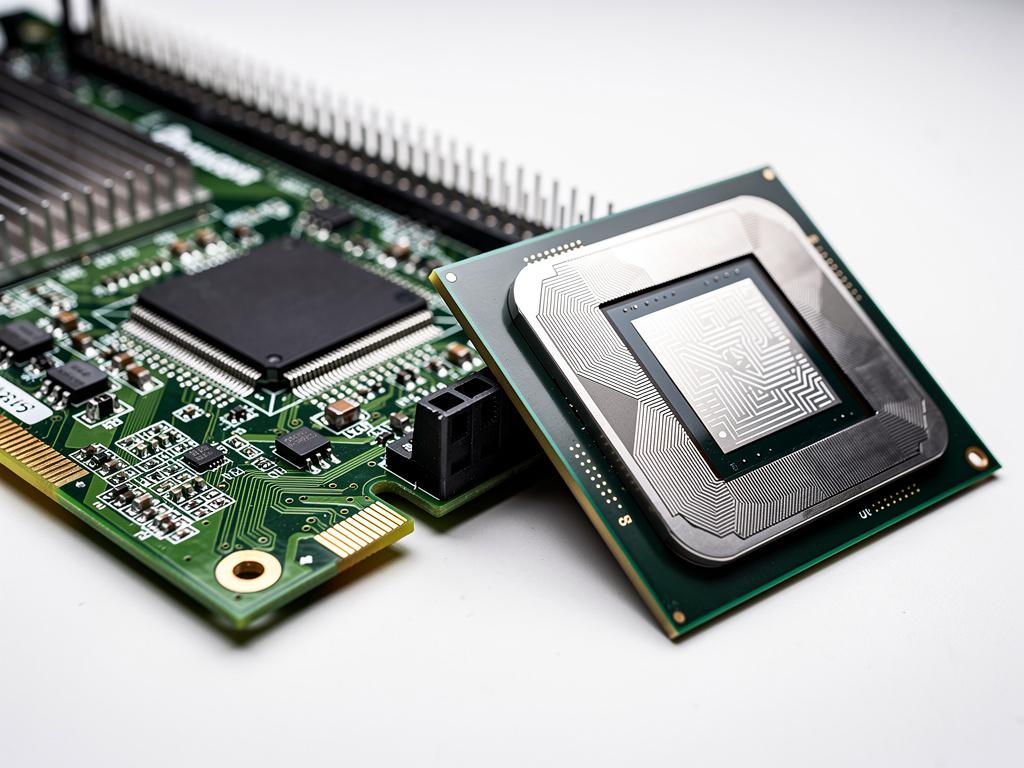
Think of GPUs as the Swiss Army knife of computing - versatile but not always the best tool for every job. Just as a professional chef relies on specialized knives rather than an all-purpose tool, modern enterprises are discovering that custom AI accelerators often outperform general-purpose GPUs for specific inference workloads.
The conventional wisdom that GPUs are the universal solution for AI processing is being challenged. As AI implementation leads, you're likely facing mounting pressure to optimize inference costs while maintaining enterprise-grade reliability. The hardware landscape has evolved significantly, with specialized AI accelerators emerging as powerful alternatives to traditional GPU deployments.
This shift isn't just about raw performance metrics - it's about finding the right tool for your specific inference needs. Whether you're managing large-scale language models or deploying edge AI solutions, understanding the true capabilities and limitations of both custom accelerators and GPUs has become crucial for making informed infrastructure decisions.
The Limitations of GPUs for Enterprise Inference
While GPUs have been the cornerstone of AI computing, their general-purpose architecture presents specific challenges for enterprise inference workloads. As an AI implementation lead, you've likely encountered scenarios where GPU deployments haven't delivered the expected performance for production inference tasks.
The fundamental issue lies in GPU architecture's design for graphics processing and general compute tasks. This versatility, while valuable for development and training, often results in unnecessary overhead when running dedicated inference workloads. Your enterprise probably maintains separate hardware stacks for development and production, making optimized inference hardware increasingly critical.
Power consumption poses another significant challenge. When scaling inference operations across your enterprise, GPU power requirements can lead to substantial operational costs and cooling demands. This becomes particularly problematic in edge computing scenarios where power efficiency is paramount.
Resource utilization efficiency often falls short in GPU deployments for inference tasks. Many enterprise workloads don't require the full computational capabilities of high-end GPUs, yet you're still paying for that unused capacity.
This is where solutions like Lightning by Smallest AI demonstrate the advantage of specialized processing, achieving faster inference speeds while maintaining enterprise-grade reliability.
Why Custom AI Accelerators Excel at Inference
Custom AI accelerators address many of the pain points you face with traditional GPU deployments. These specialized processors are architected specifically for inference workloads, eliminating unnecessary computational overhead.
The key advantage lies in their purpose-built design. While GPUs must maintain flexibility for various computing tasks, custom accelerators optimize their entire architecture for AI inference operations. This specialized focus translates to better performance per watt - a crucial metric for enterprise deployments.
Memory bandwidth and utilization see significant improvements with custom accelerators. Their architecture prioritizes efficient data movement and processing patterns specific to inference workloads. This optimization becomes particularly valuable when deploying large language models or handling multiple concurrent inference requests.
For enterprise implementations, the ability to scale efficiently is crucial. Custom accelerators often provide better density and deployment flexibility, allowing you to optimize your infrastructure footprint while maintaining performance requirements.
Common GPU Misconceptions
Myth
GPUs are always the best choice for AI workloads
Reality
For inference workloads, specialized accelerators often provide better performance, power efficiency, and cost-effectiveness than general-purpose GPUs
Cost Considerations: Beyond Initial Hardware Prices
When evaluating inference hardware options, looking beyond upfront costs is essential. While premium GPUs command significant initial investments, the total cost of ownership equation has multiple variables that affect your enterprise budget.
Operational costs often favor custom accelerators in production environments. Their superior power efficiency translates to lower electricity bills and reduced cooling requirements - expenses that compound significantly at scale. Your data center operations team will appreciate the reduced thermal management complexity.
Infrastructure utilization becomes more efficient with specialized hardware. Custom accelerators typically achieve higher throughput for inference workloads, potentially reducing the total number of devices needed to handle your production load. This improved density can lead to substantial savings in rack space and associated infrastructure costs.
Consider also the maintenance and upgrade cycles. While GPUs require regular updates to maintain compatibility with the latest AI frameworks, custom accelerators often provide more stable, longer-term deployment options. This stability can result in more predictable budget planning and reduced operational overhead.
Integration Challenges and Solutions
As an implementation lead, you're well aware that hardware changes can ripple through your entire AI infrastructure. Integrating custom accelerators requires careful planning and consideration of your existing systems.
Compatibility with your AI frameworks and tools is crucial. While GPU ecosystems offer broad software support, custom accelerator vendors are rapidly closing this gap. The key is evaluating whether your specific workloads are supported by the accelerator's software stack.
Development workflows may need adjustment when implementing specialized hardware. Your team might need to maintain separate development and production environments, with GPUs handling prototyping and custom accelerators managing production inference. This dual-track approach often proves more efficient than trying to use the same hardware type across all stages.
Enterprise support infrastructure must also adapt. Your operations team will need training on new monitoring tools and maintenance procedures. However, many custom accelerator vendors now offer enterprise-grade support comparable to traditional GPU providers.
GPU vs Custom Accelerator Characteristics
| Aspect | GPUs | Custom Accelerators |
|---|---|---|
| Workload Flexibility | High - supports various compute tasks | Optimized specifically for inference |
| Power Efficiency | Variable depending on utilization | Optimized for inference workloads |
| Integration Complexity | Established ecosystem support | May require workflow adjustments |
Future-Proofing Your Inference Infrastructure
The AI hardware landscape continues to evolve rapidly, making future-proofing a critical consideration for enterprise deployments. Your infrastructure decisions today will impact your ability to adapt to emerging AI workloads tomorrow.
Modular deployment strategies have become increasingly important. Consider implementing a hybrid approach that combines both GPU and custom accelerator technologies, allowing you to leverage the strengths of each platform while maintaining flexibility for future requirements.
Scalability planning should account for both vertical and horizontal growth. Custom accelerators often provide more predictable scaling characteristics for inference workloads, making capacity planning more straightforward. This predictability becomes particularly valuable when planning multi-site or edge deployments.
Keep an eye on emerging standards and integration capabilities. The industry is moving toward more standardized interfaces for AI acceleration, which could simplify future hardware transitions and reduce vendor lock-in concerns.
Conclusion
The shift from general-purpose GPUs to specialized AI accelerators represents a fundamental evolution in enterprise inference infrastructure. As processing demands grow and efficiency becomes paramount, the advantages of purpose-built hardware become increasingly clear. While GPUs will continue to play a crucial role in AI development and training, custom accelerators are establishing themselves as the optimal choice for production inference workloads. Your success in navigating this transition will depend on careful evaluation of your specific workload requirements and a clear understanding of how different hardware options align with your enterprise goals.

How Lightning by Smallest AI Optimizes Voice Inference Workloads
Smallest AI
World's fastest text-to-speech processing
Reduces inference latency for real-time voice applications
Multi-modal asynchronous language processing
Optimizes resource utilization across different inference workloads
Support for 30+ languages
Enables efficient scaling of multilingual voice operations
Frequently Asked Questions
Sources & References
- 1
GPU vs TPU vs Custom AI Accelerators | by Zaina Haider - Medium
https://medium.com/@thekzgroupllc/gpu-vs-tpu-vs-custom-ai-accelerators-55194b811a8b
- 2
What's the Difference Between AI accelerators and GPUs? - IBM
https://www.ibm.com/think/topics/ai-accelerator-vs-gpu
- 3
AI Accelerator vs GPU: 5 Key Differences and How to Choose
https://www.atlantic.net/gpu-server-hosting/ai-accelerator-vs-gpu-5-key-differences-and-how-to-choose/
- 4
GPU vs AI Accelerator: What Are The Differences? | Contabo Blog
https://contabo.com/blog/gpu-vs-ai-accelerator-differences/
- 5
Beyond GPUs and TPUs: Why AI Acceleration Cards Are the Future ...
https://www.geniatech.com/ai-accelerator-vs-gpu-vs-tpu/
- 6
The Silicon Revolution: Why Custom AI Chips and On-Device AI are ...
https://aiireland.ie/2026/01/12/the-silicon-revolution-why-custom-ai-chips-and-on-device-ai-are-transforming-2026/
- 7
LLM Inference Hardware: An Enterprise Guide to Key Players
https://intuitionlabs.ai/articles/llm-inference-hardware-enterprise-guide
- 8
TPU vs GPU: Choosing the Right Hardware for Your AI Projects
https://www.digitalocean.com/resources/articles/tpu-vs-gpu
- 9
To GPU or not GPU - Alphawave Semi
https://awavesemi.com/to-gpu-or-not-gpu/
- 10
SambaNova, Groq, Cerebras vs. Nvidia GPUs & Broadcom ASICs
https://medium.com/@laowang_journey/comparing-ai-hardware-architectures-sambanova-groq-cerebras-vs-nvidia-gpus-broadcom-asics-2327631c468e
- 11
AI Inference Chips Latest Rankings: Who Leads the Race? - Uvation
https://uvation.com/articles/ai-inference-chips-latest-rankings-who-leads-the-race
- 12
How "exactly" are AI-accelerator chip ASICs built differently than ...
https://ai.stackexchange.com/questions/38701/how-exactly-are-ai-accelerator-chip-asics-built-differently-than-gpus-as-gpu-s
More from Smallest AI
How to Automate Your Podcast Transcription: A Step-by-Step Guide for Content Creators
Learn how to automate podcast transcription effectively. Transform your audio content into searchable text, improve accessibility, and streamline content repurposing.
Voice Fatigue Solutions: How AI Speech Generation Saves Creator Health
Discover how AI speech generation helps YouTubers and course creators protect their vocal health while scaling content production. Learn sustainable voice solutions for content creators.
How to Transform Your Podcast Audio into SEO-Rich Content Automatically
Learn how to automate podcast transcription and convert your audio content into SEO-optimized text, show notes, and social media posts efficiently.